

 Back to Blog
AI recruiting tools do very different jobs. Some read and score applications. Some run video interviews. Some chat with candidates and book the slots. Buying the wrong kind is the most common mistake.
Most teams already use some AI in hiring. SHRM's 2025 Talent Trends research found that 51% of organisations use AI to support recruiting, more than any other area of HR.
We tested this with Brightwell & Hart, which had 12 applications for a Senior Product Designer role and no in-house recruiter.
What to Check Before You Choose
Four questions separate the tools. Does it score applicants against criteria you set? Does it explain each score? Does it take the admin off your desk, meaning forms, scheduling and candidate emails? And does the decision stay with your team?
Regulators are asking the same questions. New York City requires a bias audit for automated employment decision tools, and the EU AI Act treats AI used to screen candidates as high-risk.
How Freddie Screened the Role
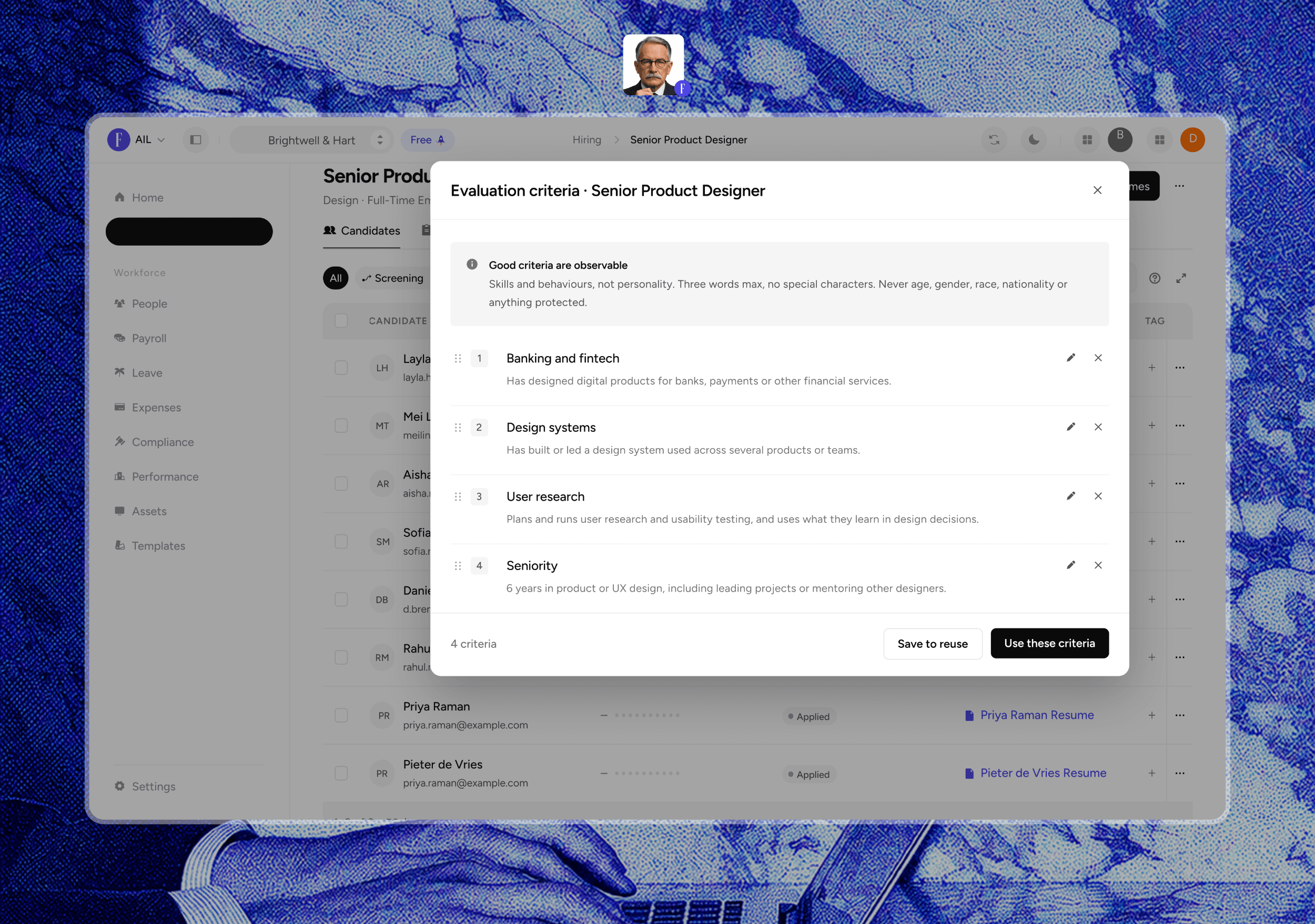
The role was scored on four criteria set before any application was read. These were banking and fintech experience, design systems, user research and seniority.
The criteria are set before scoring, and every applicant is measured against the same four.
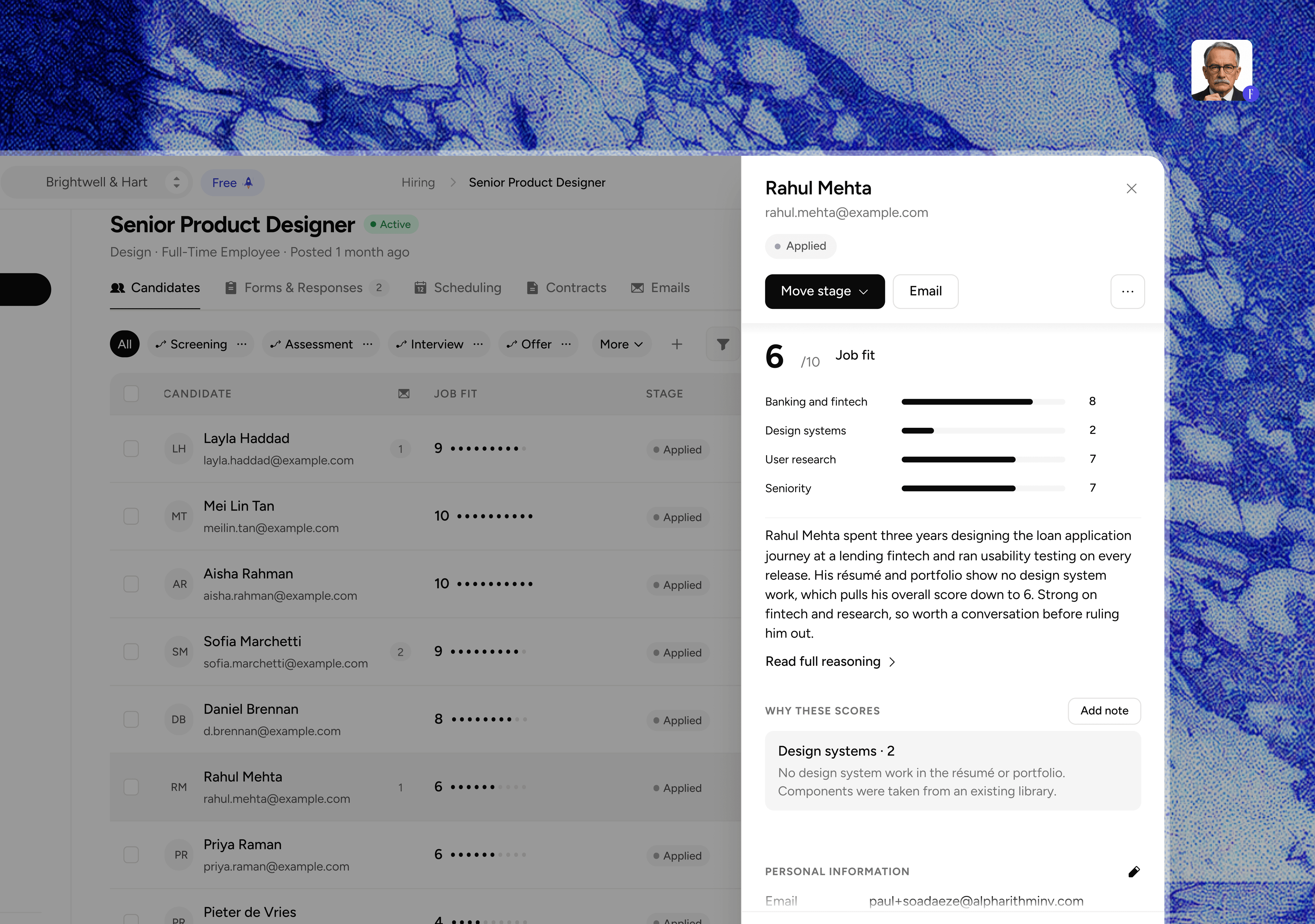
The last four résumés were scored within about a minute and a half of upload. Each candidate received a Job Fit score out of ten, the average of their scores on each criterion.
Five candidates scored eight or above. Three scored between five and seven, and the rest scored four or below. The averages hide useful detail. One applicant with three years at a lending fintech scored 8 for fintech and 7 for research, but 2 for design systems, which put him at 6 overall. That is a conversation for the hiring manager, not a rejection.
Every candidate scored against the same criteria, with the reasoning behind each score.