

 Back to Blog
Why previous earnings calls, management’s changing promises and the numbers behind a company’s performance matter as much as its latest results.
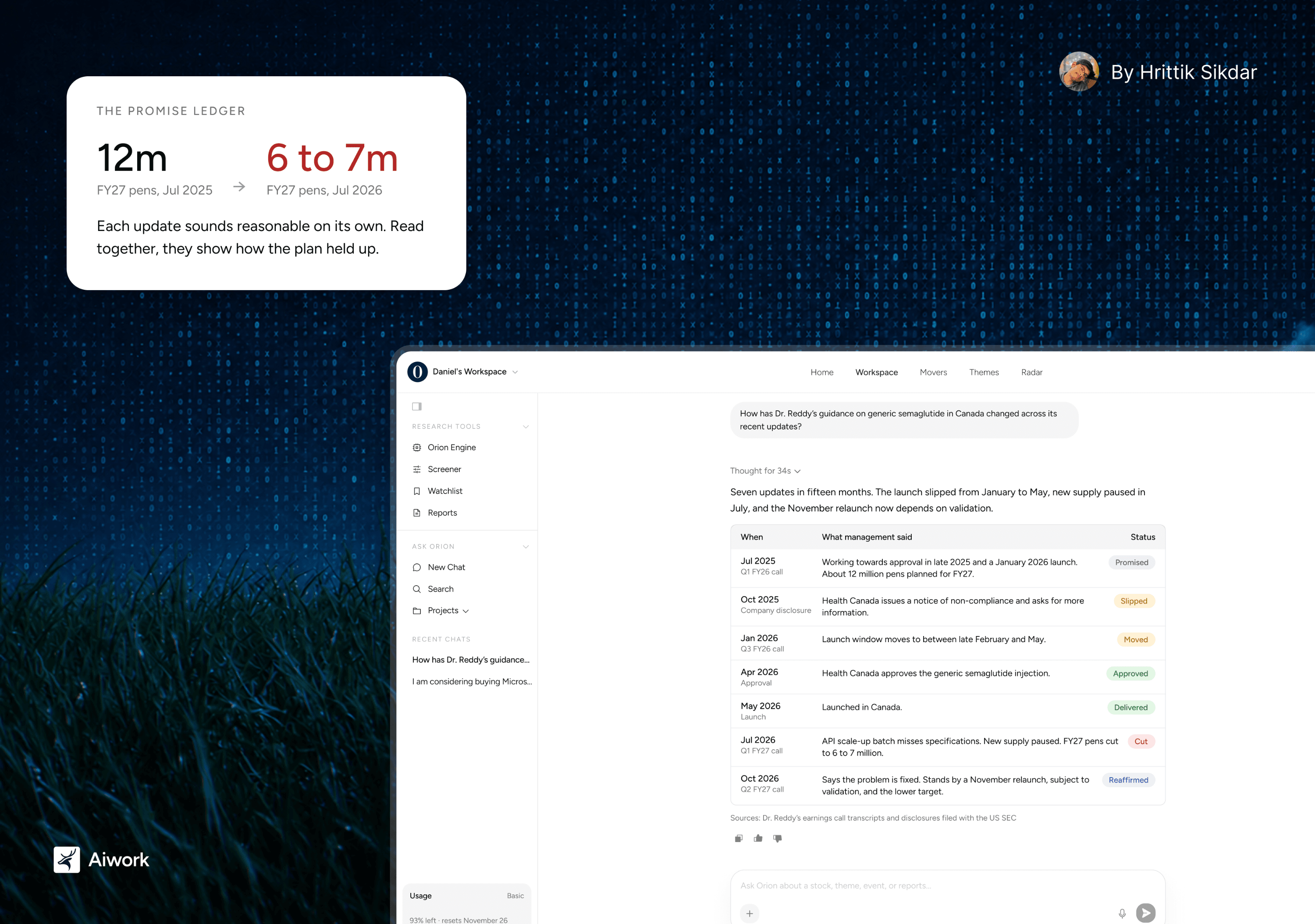
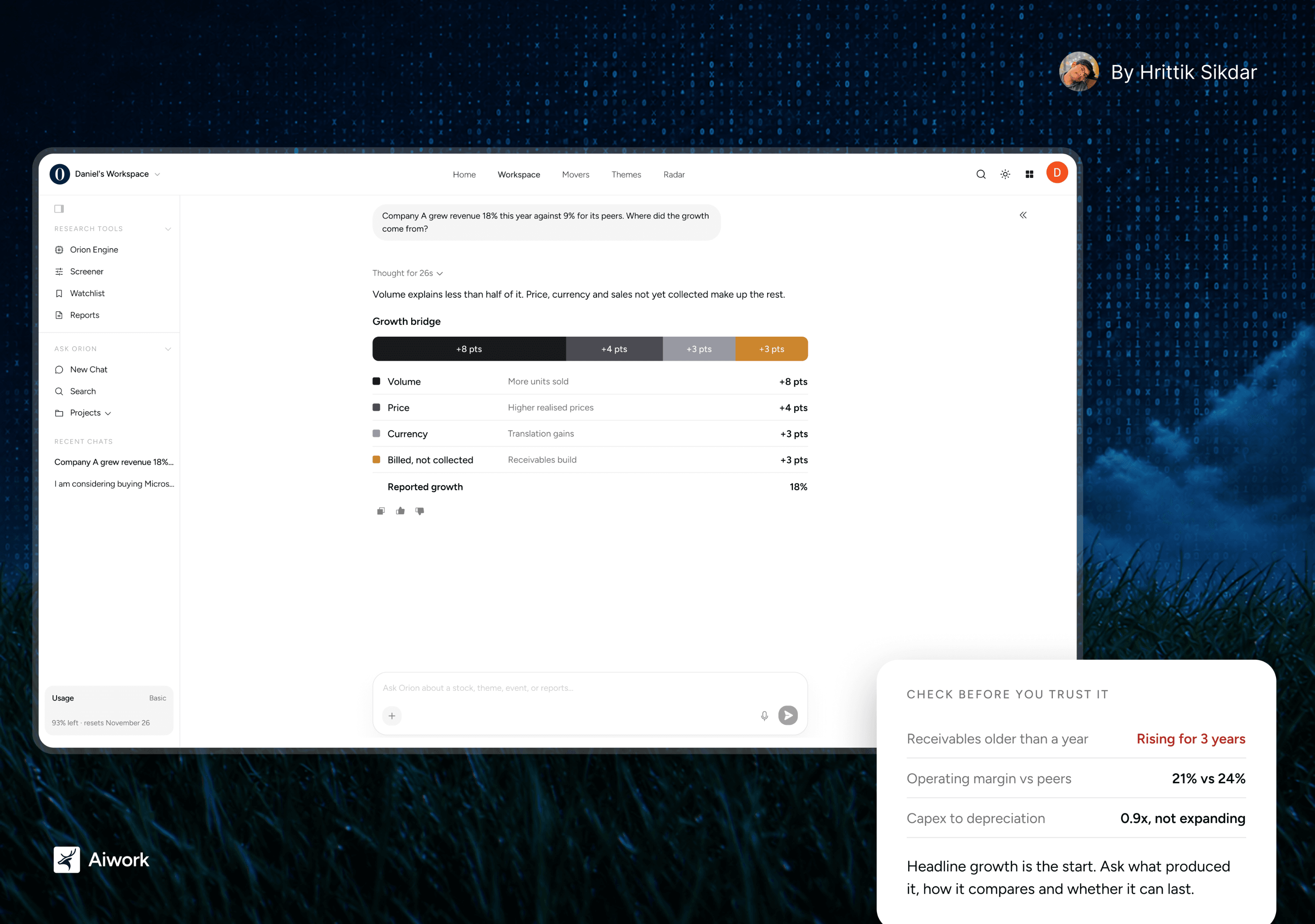
For Hrittik Sikdar, a CFA candidate and an equity research writer based in Kolkata, an earnings call is one part of a much longer conversation. Management’s latest guidance matters, but so does what it promised a year ago, how those expectations have changed, and whether the financial statements support its account of the business.
We spoke with Hrittik about his approach to equity research, what he has learned following Dr. Reddy’s Laboratories, and why understanding a company requires more than reading its latest results.
The Work Starts Before the Earnings Call
Hrittik’s research begins with the broader economy. From there, he examines the sector, comparable businesses in other markets, domestic competitors, and finally, the company itself.
The comparisons, however, need to reflect how those businesses actually operate. Reliance Industries and the Adani Group, for example, have interests across multiple sectors. Hrittik compares them only where their operations overlap, rather than treating the conglomerates as directly comparable.
Even businesses selling similar products may differ in their inventory cycles, margins and operating models.
“We have to see whether the business is the same, and whether the core agenda is the same,” Hrittik explains.
That requires a working knowledge of the sector itself. Pharmaceuticals, specialty chemicals and heavy industry each have their own terminology, commercial dynamics and performance measures. Understanding these differences takes time.
“These businesses were established over 20 to 50 years. We can’t learn 20 or 50 years of knowledge within one day.”
Hrittik recommends sustained study of a sector before forming strong convictions about individual companies. For students and early-career professionals developing their research skills, he suggests spending more than six months building that familiarity.

Hrittik begins with economic and sector context before examining a company’s performance.