

 Back to Blog
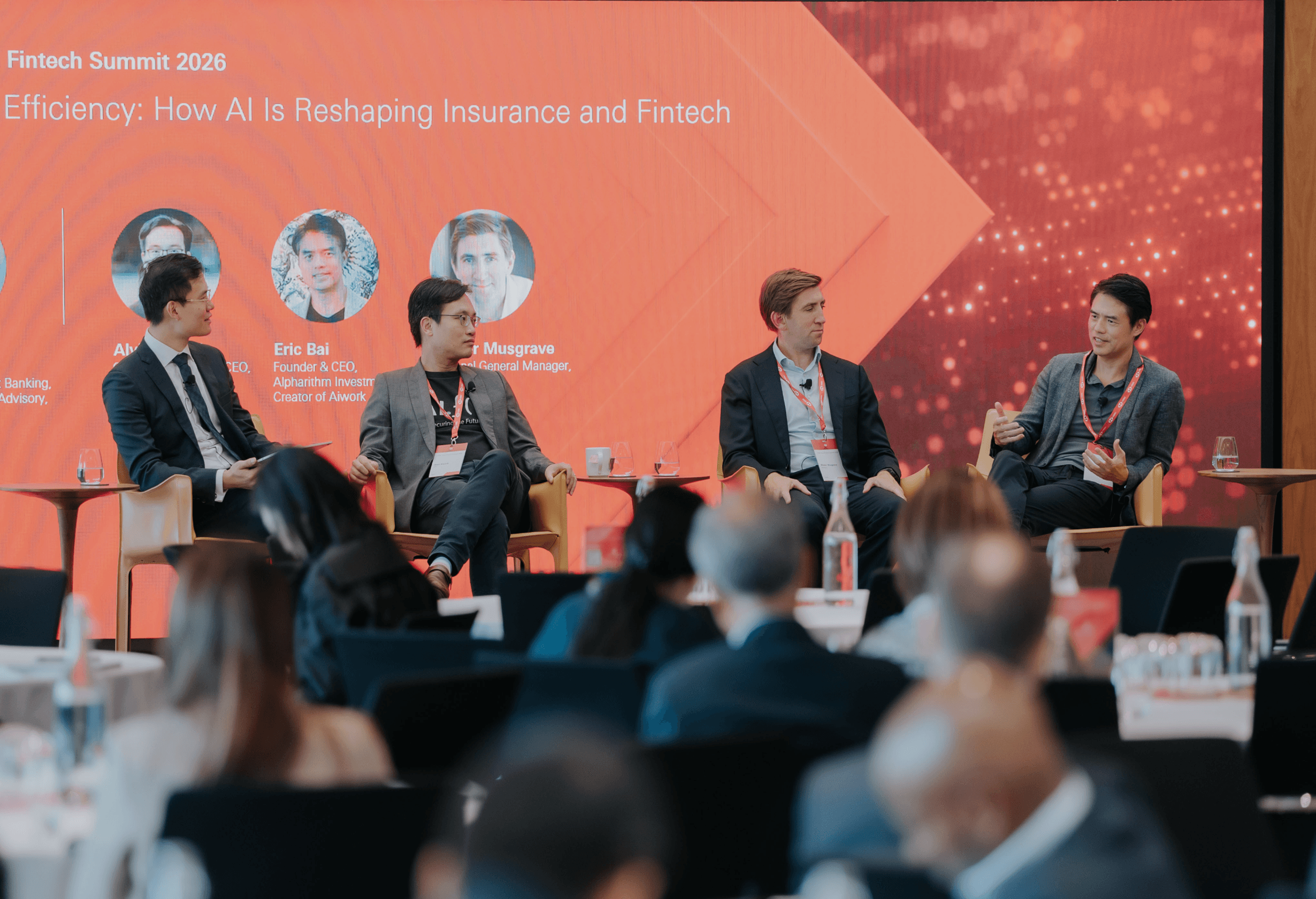
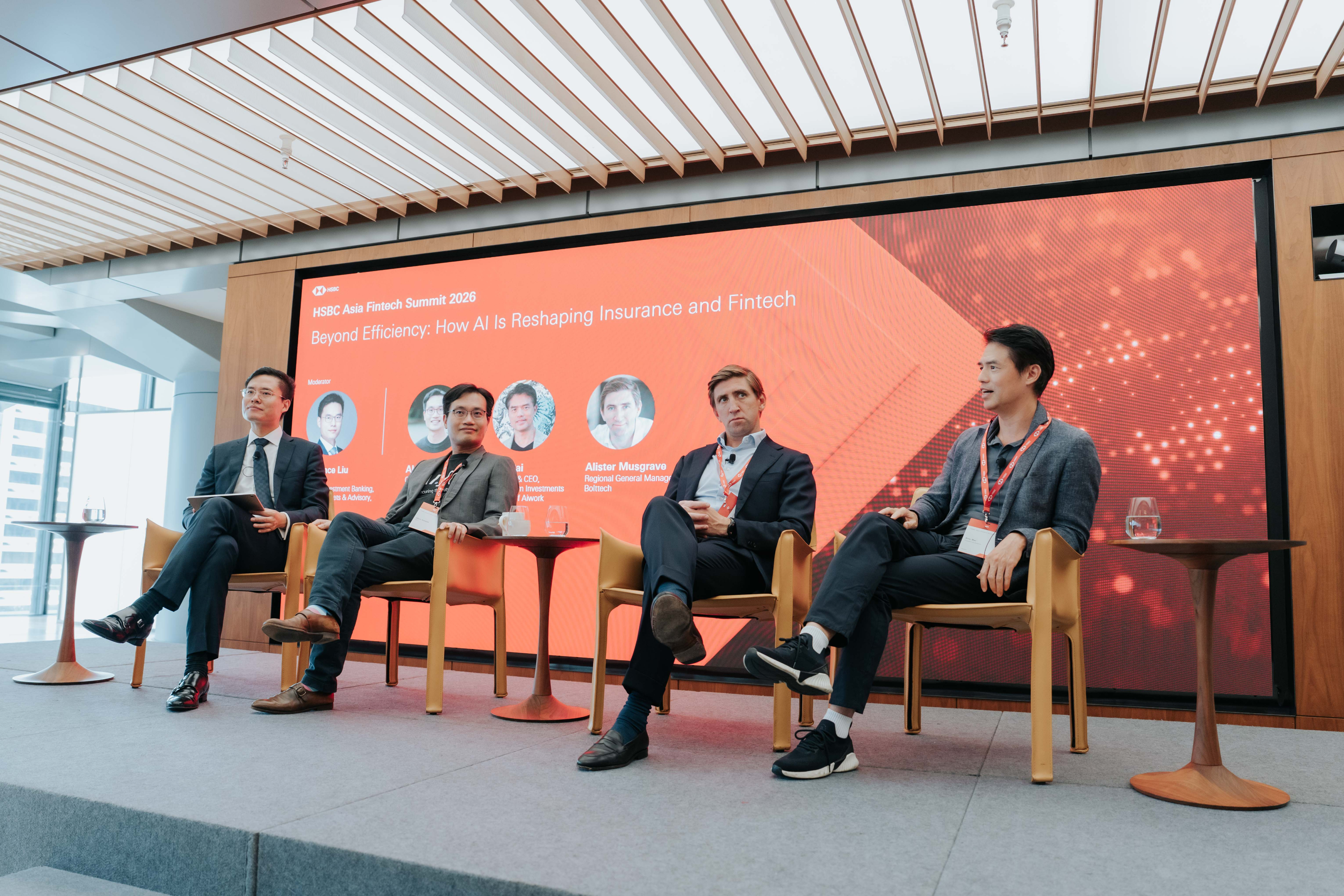
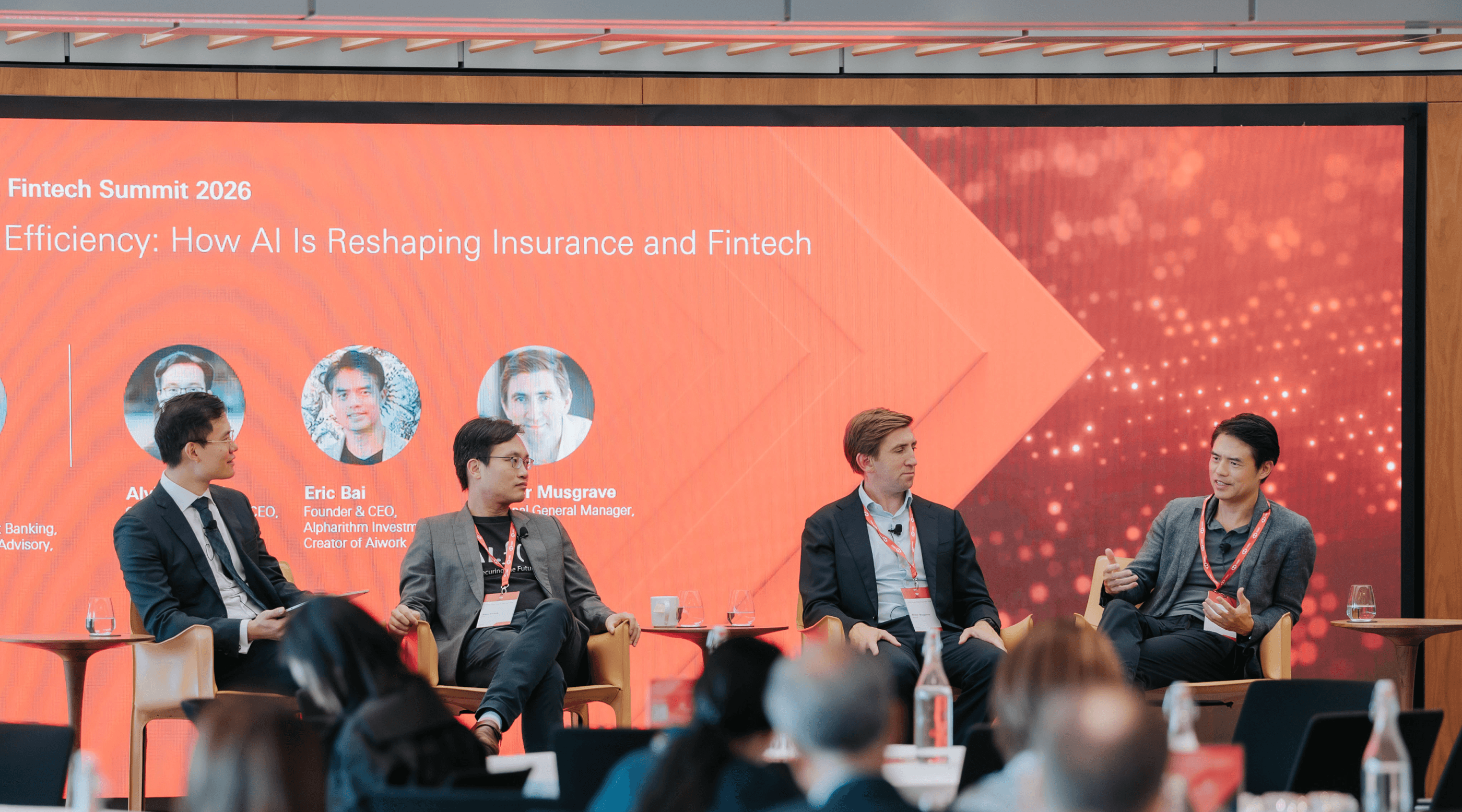
Aiwork founder and CEO Eric Bai spoke at HSBC's first Asia Fintech Summit in Hong Kong on 21 August 2026, on a panel called "Beyond Efficiency: How AI Is Reshaping Insurance and Fintech".
His argument, in one line: finance is a decision-making industry, and intelligence itself is becoming scalable.
How is AI changing fintech?
Every financial decision, Eric argued, comes down to two things: data and intelligence. An investor decides what to buy, what to sell and when. A bank decides whom to lend to and at what price. An insurer decides which risks to take and how to price them. The data has been piling up for years: in 2018, IDC estimated that 33 zettabytes of data were created, captured and copied worldwide, and projected 175 zettabytes by 2025. What has changed is the intelligence on top of that data. Traditional fintech was mostly digitisation, automation and narrow machine learning: one model, one task, one output. Modern AI reads information, follows context, reasons across sources and reaches a conclusion.
"We're moving from human decision-making, to machine-assisted decision-making, to AI decision-making," Eric told delegates.
That shift is what Aiwork is built around: AI workers with real domain expertise, such as Orion, an AI equity analyst that covers thousands of global stocks, gathering information, analysing companies and producing investment insights. The biggest impact of AI on fintech, he said, isn't faster processing of financial information. It's that intelligence itself is becoming scalable.
Efficiency tool or fundamental change?
Both, Eric said, but looking only at efficiency underestimates what's happening. Everyone can see the first-order effect: AI helps us write, code and analyse faster, and takes over repetitive work. The more interesting question is the second-order effect. If intelligence becomes much cheaper and easier to scale, why should companies and products be organised the way they were before?
He recalled that when Aiwork started in 2024, people watching early demos said it might replace some entry-level work. That no longer holds. AI can now take on work that used to need years of professional experience: working through complex information, weighing the possibilities and producing a recommendation in seconds.