

 Back to Blog
For Pauline Healey, a fractional CFO with more than 25 years of experience in finance and operations, understanding a company's financial position requires looking beyond what's currently in its bank account.
A business may have sales coming in and still face a cash shortage when suppliers need paying. Its financial reports may show growth without revealing the costs or delays behind it.
We spoke with Pauline about what a monthly business review should reveal, from forecasting cash and agreeing on reliable numbers, to confronting problems that might otherwise go unnoticed.
Forecast the Cash, Not Just the Sales
One mistake Pauline sees in product-based businesses is the tendency to forecast sales without considering when the money will actually move.
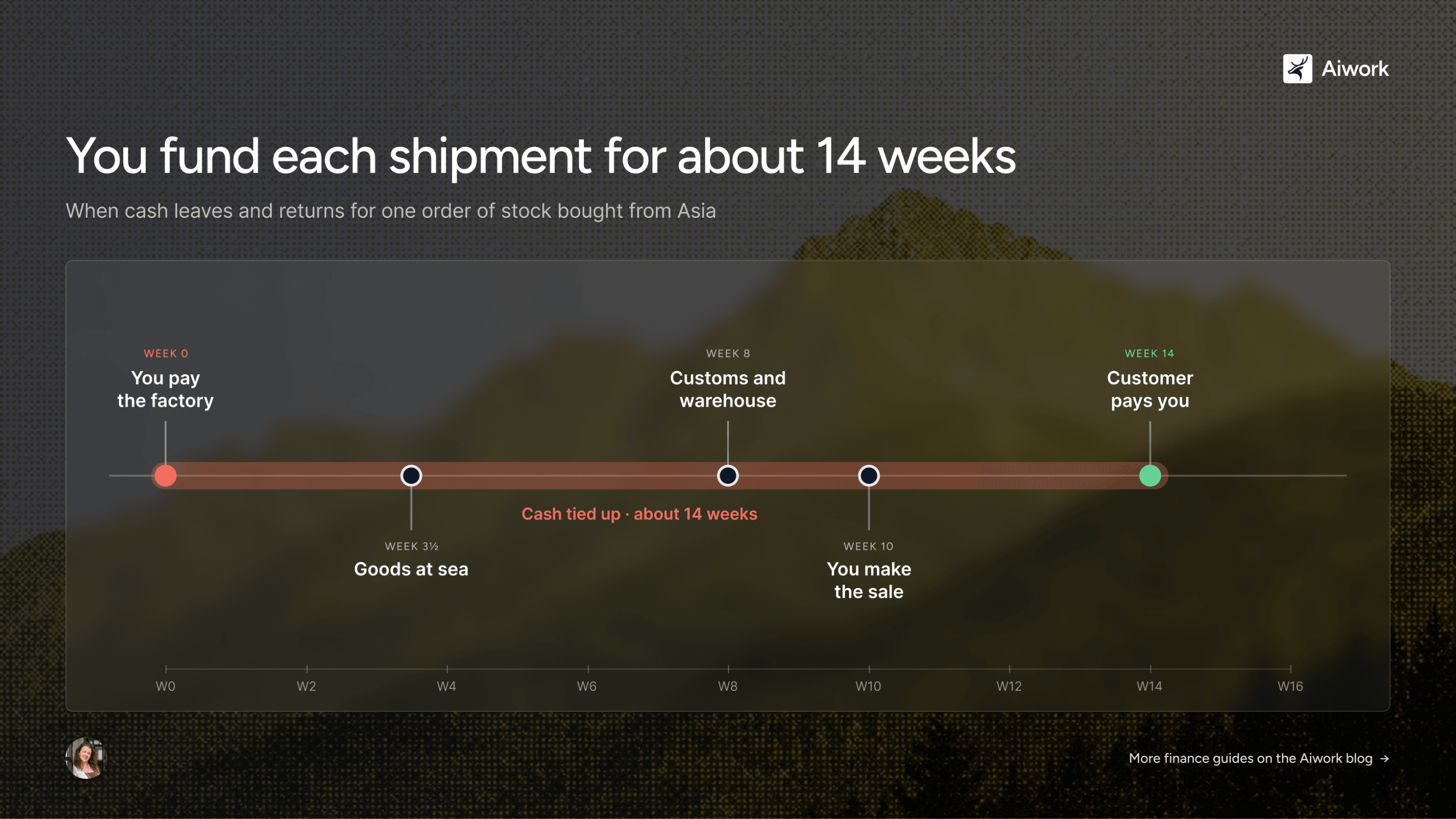
Consider a manufacturer buying goods from a factory in Asia. Payment may be due when the goods leave the factory, months before customers pay for them. Sales projections alone will not reveal the gap.
Pauline uses a 13-week cash flow forecast to make those commitments visible. It tracks expected customer payments, money leaving the business and the resulting cash balance, week by week.
The forecast is updated as actual payments come in, making it possible to see where expectations have changed and where cash may become tight.
That visibility creates room to act: renegotiate supplier terms, follow up on overdue invoices or arrange financing before the shortage becomes immediate.
And while forecasts will never be perfectly accurate, Pauline doesn't consider uncertainty a reason to avoid them.
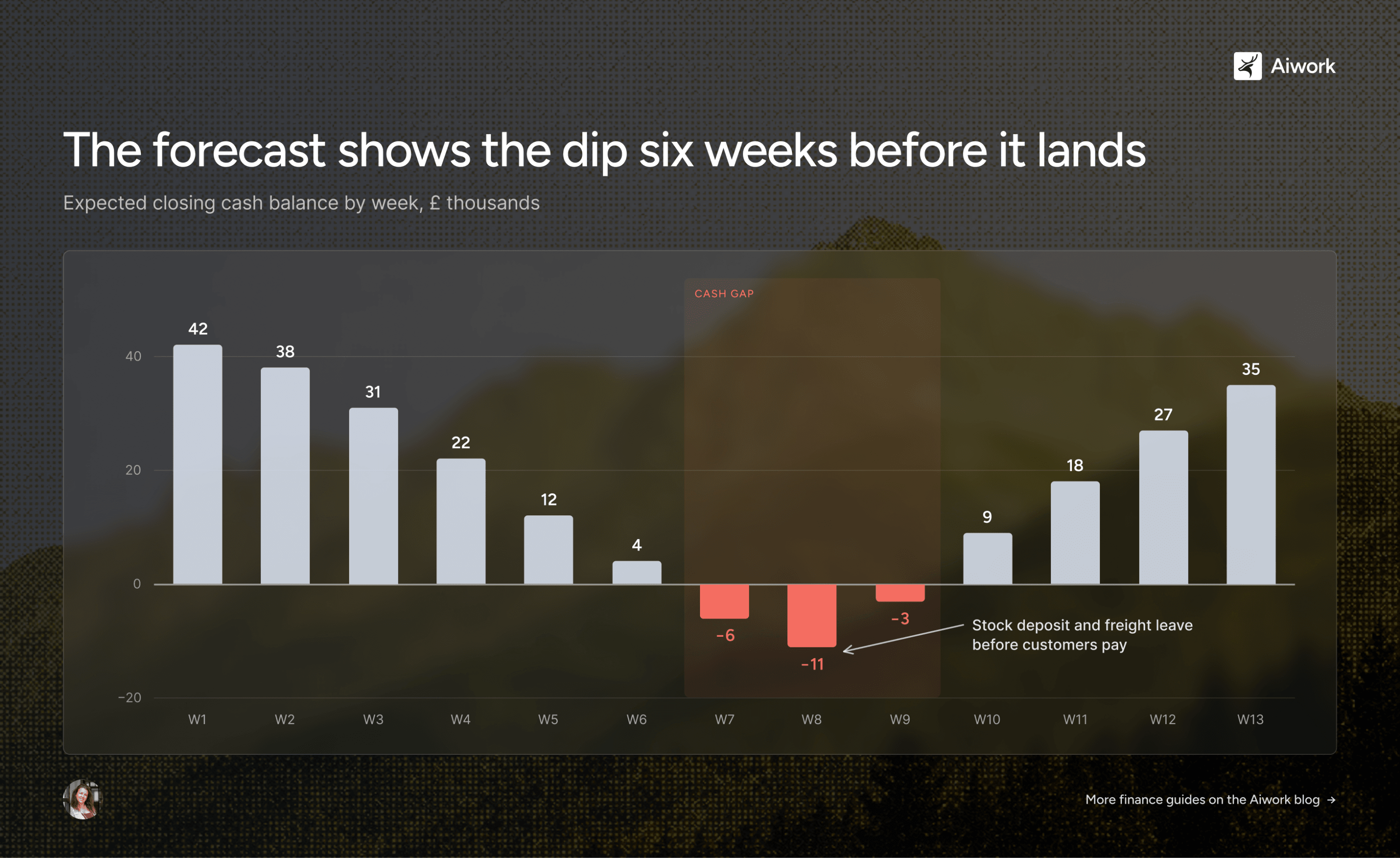
A rolling forecast makes future cash commitments visible before they reach the bank account.
One Business, One Set of Numbers
A useful business review depends on more than accurate calculations. The people responsible for different parts of the business also need to agree on what the numbers represent.
Pauline has encountered businesses where owners cannot fully account for recurring payments or the true cost of their products.
For a manufacturer, that cost includes more than the purchase price. Freight, duties and handling all contribute to what accountants call the landed cost. Expenses already incurred but not yet invoiced must also be reflected in the accounts.
Without that groundwork, different teams can arrive at the same meeting with conflicting interpretations of the business.